MAINTENANCE
In this section you’ll learn how to take care of different types of knives, and what the differences are between collector’s pieces and knives meant for everyday use. You’ll also find out how to store your knives properly, how to protect their surfaces, and how to care for the individual parts of a knife over time. If you’re looking for more general information about the materials I use or about carbon damascus steel itself, please visit the “Knife Guide” section.
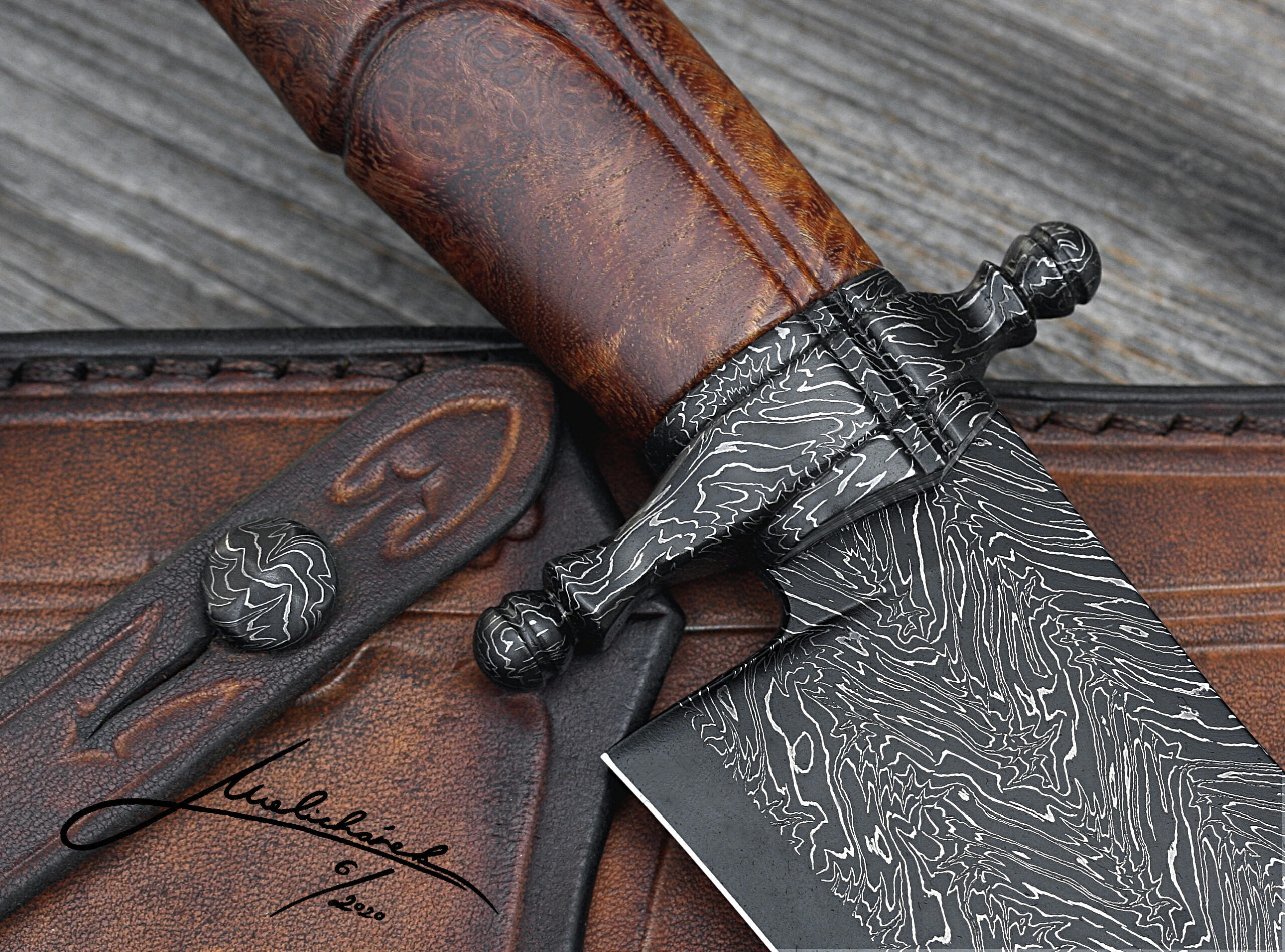
To begin with, I want to emphasize that even the most luxurious knives from my workshop always meet the standards of a knife as such. Even the most ornate and artistic pieces are still fully functional. Whether you choose to use them or keep them untouched is entirely up to you. Some people buy a knife for their collection, some as an investment or as a gift to be preserved, and others for everyday use. Please pay attention to the following notes, and if you have any doubts, feel free to contact me. I’ll
be happy to clarify anything for you.
Using your knife
If you plan to use the knife regularly, you don’t need to focus much on the storage notes for collector’s pieces—knowing a few basic rules is enough. Over time, the knife will develop its own “worn-in” patina and a character of its own.
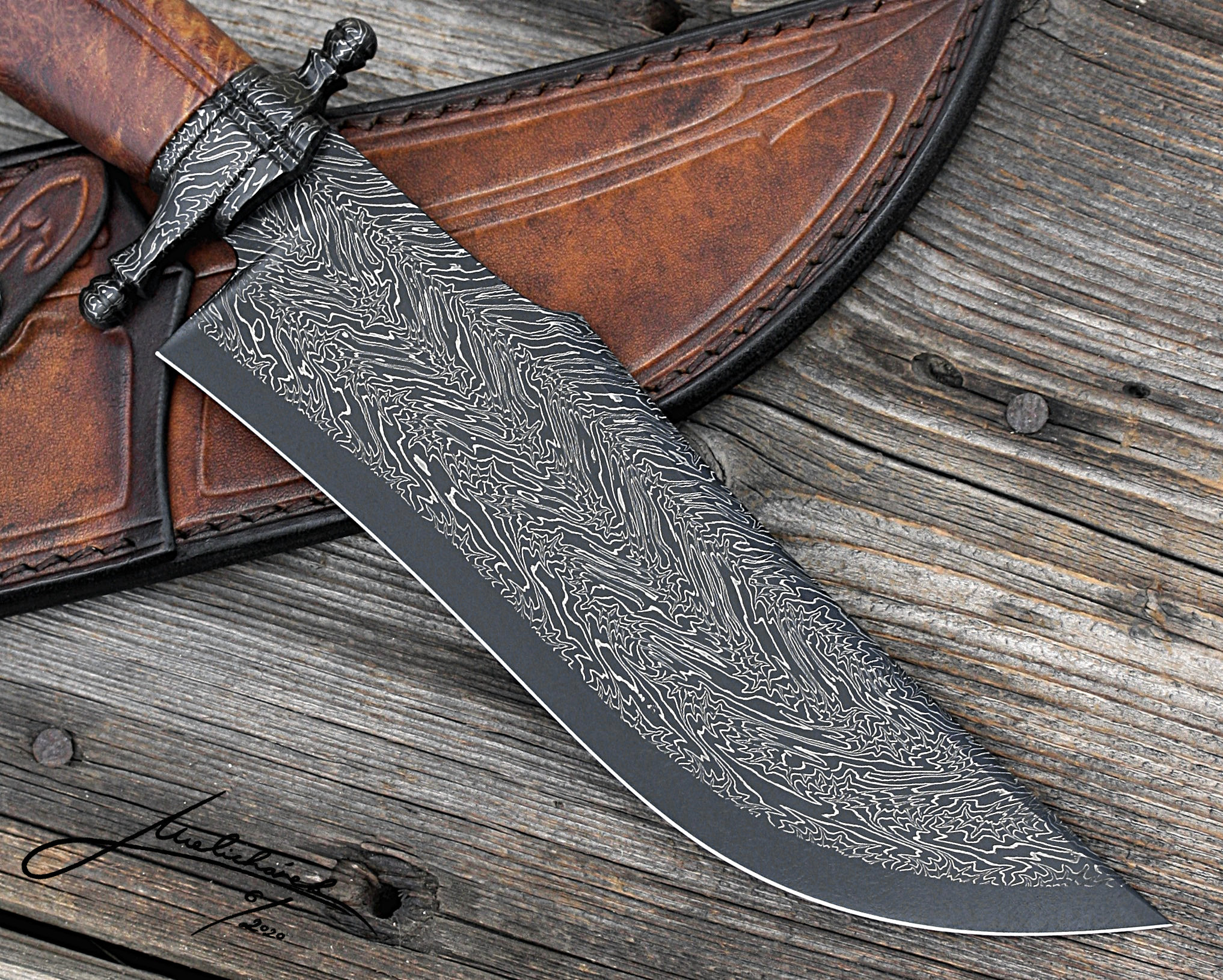
You should keep in mind that the dark patina will wear off, starting from the very first use if you cut anything other than soft foods. There’s no need to worry that the damascus pattern itself will disappear—it’s etched in quite deeply and will almost certainly never vanish. If needed, it can be refreshed. Over time, however, the individual layers of the pattern—and the knife as a whole—will become lighter, taking on a silver-gray or even silvery look depending on how much it’s used. This is a natural process and cannot be prevented.
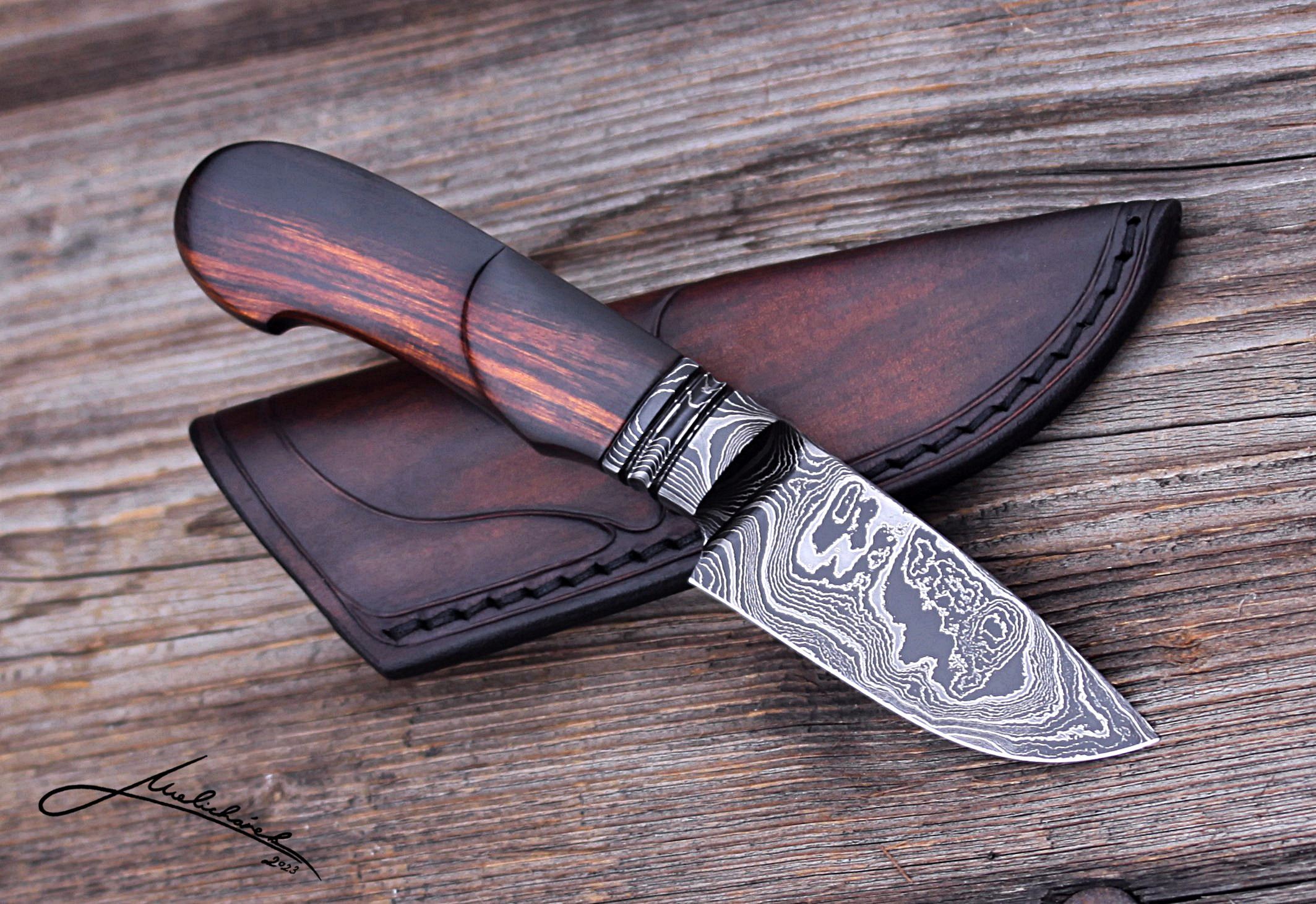
Since the steel is not stainless, some areas that don’t come into contact with the material being cut will actually darken over time. You can even out the whole knife’s appearance with fine steel wool, an ultra-fine abrasive like Scotch-Brite, or ultra-fine sandpaper. If you’re not sure which product would be best for your particular knife, feel free to contact me and I’ll be glad to advise you. However, if you’ve decided to keep the knife as a collector’s piece, the following text will guide you on how to preserve it in the best possible condition. After that, be sure to also read the sections on general knife protection and maintenance further below
Collector’s knife
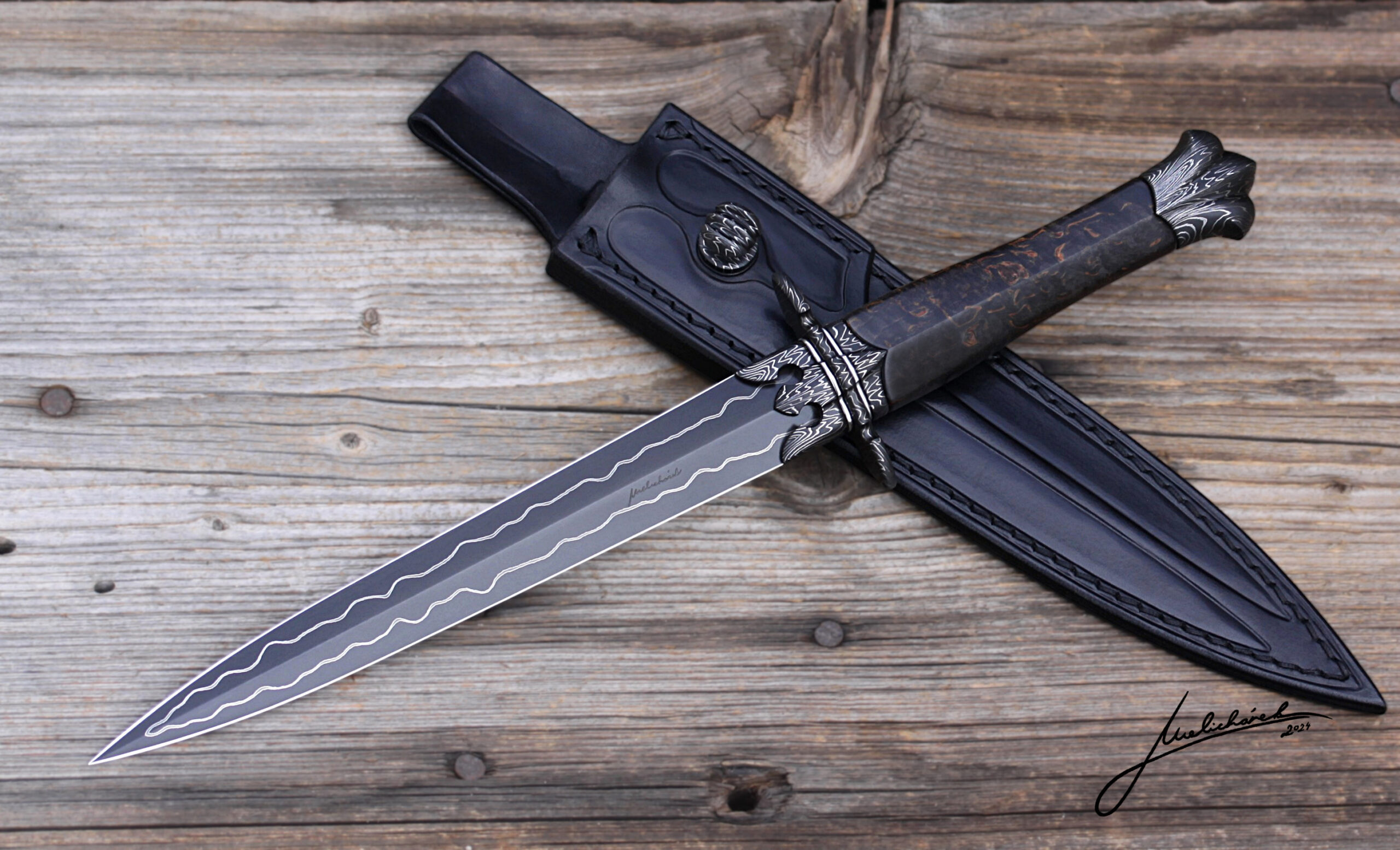
The knife as you see it in the photos is shown at its finest: darkened, sharpened, lit properly, and photographed from the right angles. The surfaces are finished to the best of my ability. In this state, the knife is essentially in “collector-grade” condition.
Even though all the surfaces are fairly durable and won’t just wipe off with a tissue, they naturally have their limits, and the knife will change with use. The dark coloring on the blade will start to wear off during cutting, as well as from being put into and taken out of the sheath repeatedly.
If you want to preserve the knife’s surface finish in perfect condition, use the sheath only for transport. Always oil the knife well beforehand and wrap it in plastic food wrap. Without this protection, frequent use of the sheath will sooner or later smooth out, polish, or scratch certain areas of the blade—and for a collector’s piece, that’s undesirable. In fact, it can happen after only a few uses if the knife isn’t wrapped and oiled.
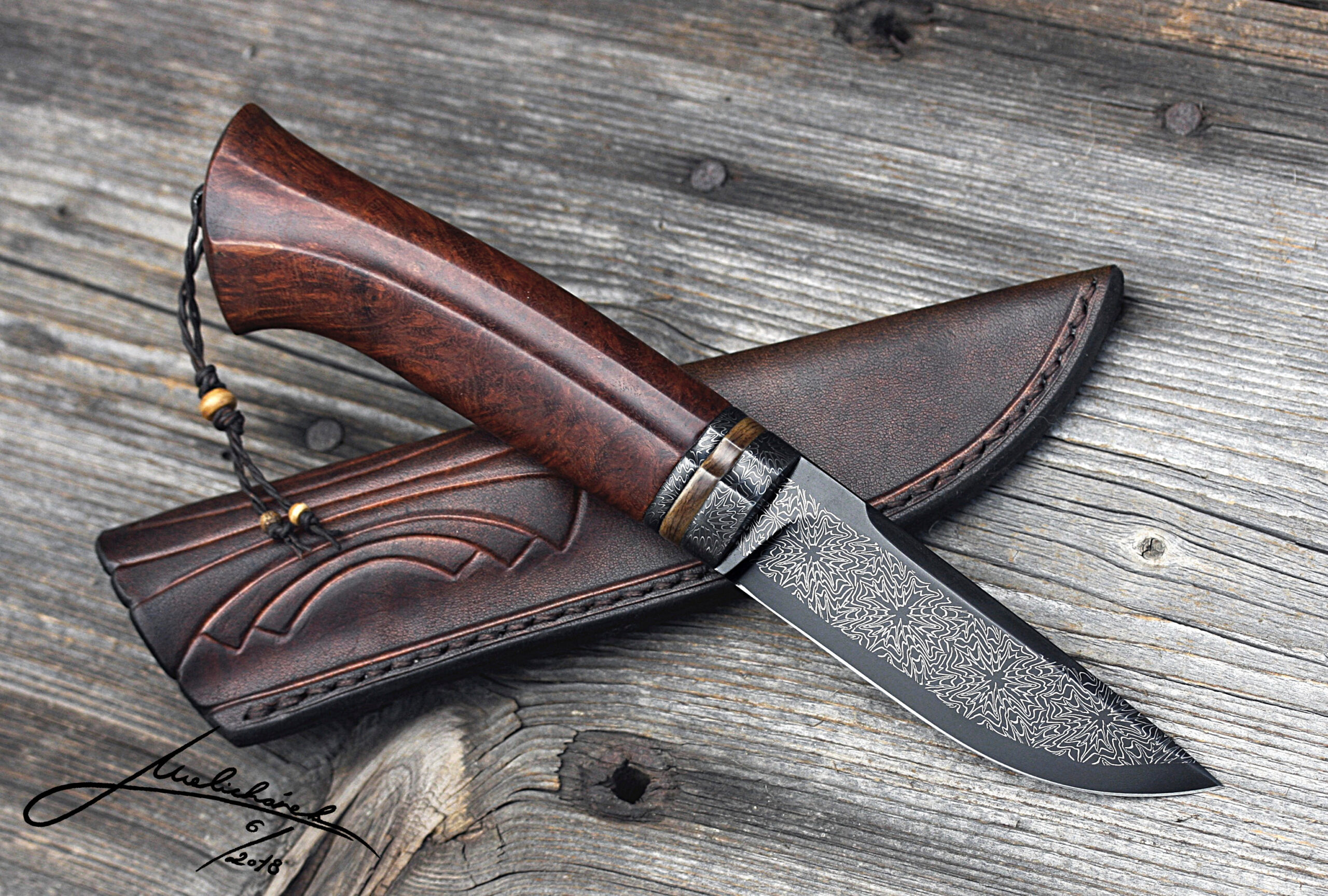
The knife will arrive in an insured parcell, carefully wrapped in several layers of plastic film and well-oiled. The final layer of wrap is placed between the knife and the sheath.
Handle with care! The knife is sharp enough to shave with, and the oil can make it slippery. Always unwrap it over a table, not over a hard surface—to avoid dropping it and causing damage to the knife or injury to yourself.
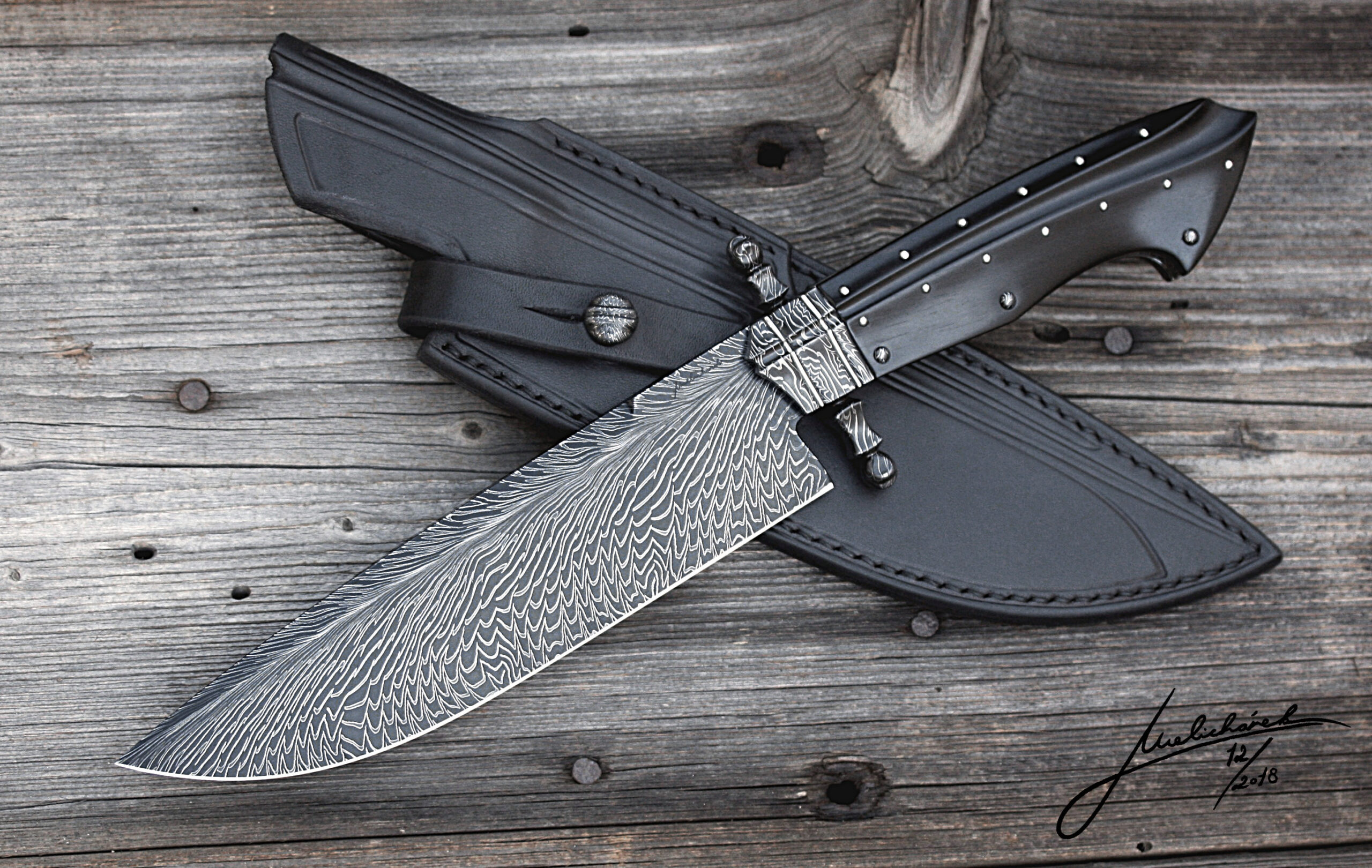
After unwrapping, gently wipe the knife with a clean paper towel. Be careful with dust, sand, or dirt on your hands or on the towel—it could cause small, noticeable scratches on the blade’s patina. After wiping, apply another thin layer of suitable protective oil. I recommend some mineral conservation oil (do not use WD-40!).
After that, the knife can be stored in a closed cabinet, display case, or drawer—outside of the sheath. A knife looks its best and shows the richest colors when it’s freshly oiled. It’s similar to the effect of a seashell: in the water it looks beautiful, but once it dries, it loses part of its charm. The etched surface of a knife behaves in a similar way.
For example, before taking photos I spray on a light coat of oil, then gently wipe off the excess with a clean, soft paper towel—just enough so there are no dry spots, but also no oil running down the blade. The goal is the thinnest possible, yet uniform film. I then smooth out the layer and remove any lint or dust with an ultra-fine toothbrush. Be careful with the brush, though—if the bristles get stuck together with dry oil and dust and harden over time, they could scratch the patina surface.
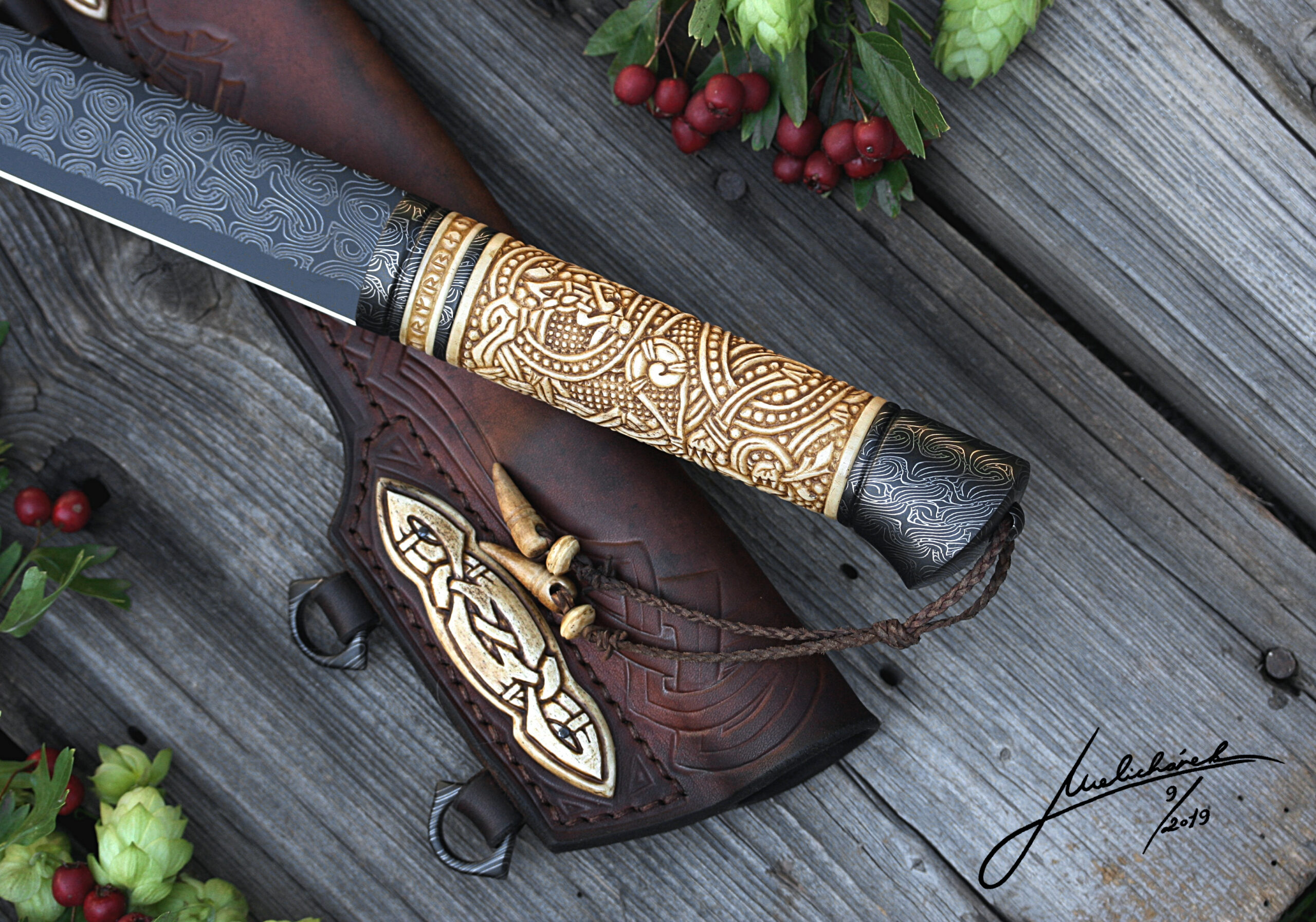
You can display the knife like this, and repeat the process whenever needed—it depends on where the knife is displayed. If someone handles it while viewing and leaves fingerprints or has sweaty hands, it’s best to wipe and re-oil the knife. Be careful with those popular “sharpness tests” from friends: when “shaving” or testing with fingers, sweat can remain on the edge, and if a larger amount stays there, you might find a rusty fingerprint or a damaged edge in the display case six months later. Of course it depends on conditions and humidity, but I mention this as a cautionary example for knives stored long-term.
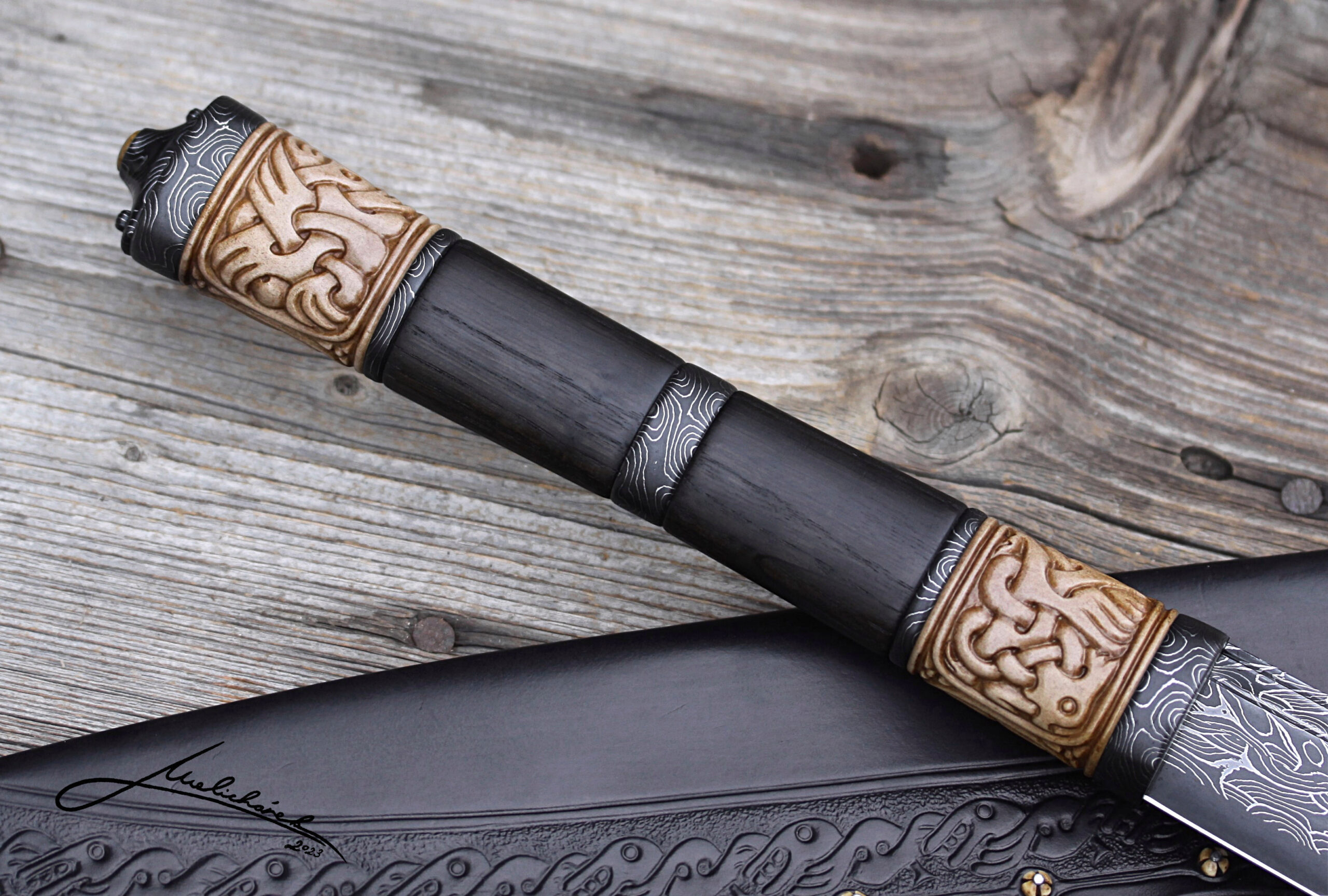
For knife conservation, various waxes can also be used— i heard products based on natural oils with beeswax generally work well, and carnauba wax is suitable for polishing surfaces. But I don’t yet have much deeper experience with waxes myself. At the same time, I don’t really like the idea of applying a thick layer of some super-durable preservative—I prefer to keep the option of easily refreshing the patina if needed.
Over time, oil also tends to form a sort of solid film as it dries. But I assume every collector has their own tricks for that. Since knives usually don’t “stay with me” long before being sent off to customers, I don’t have much deeper experience in this area.
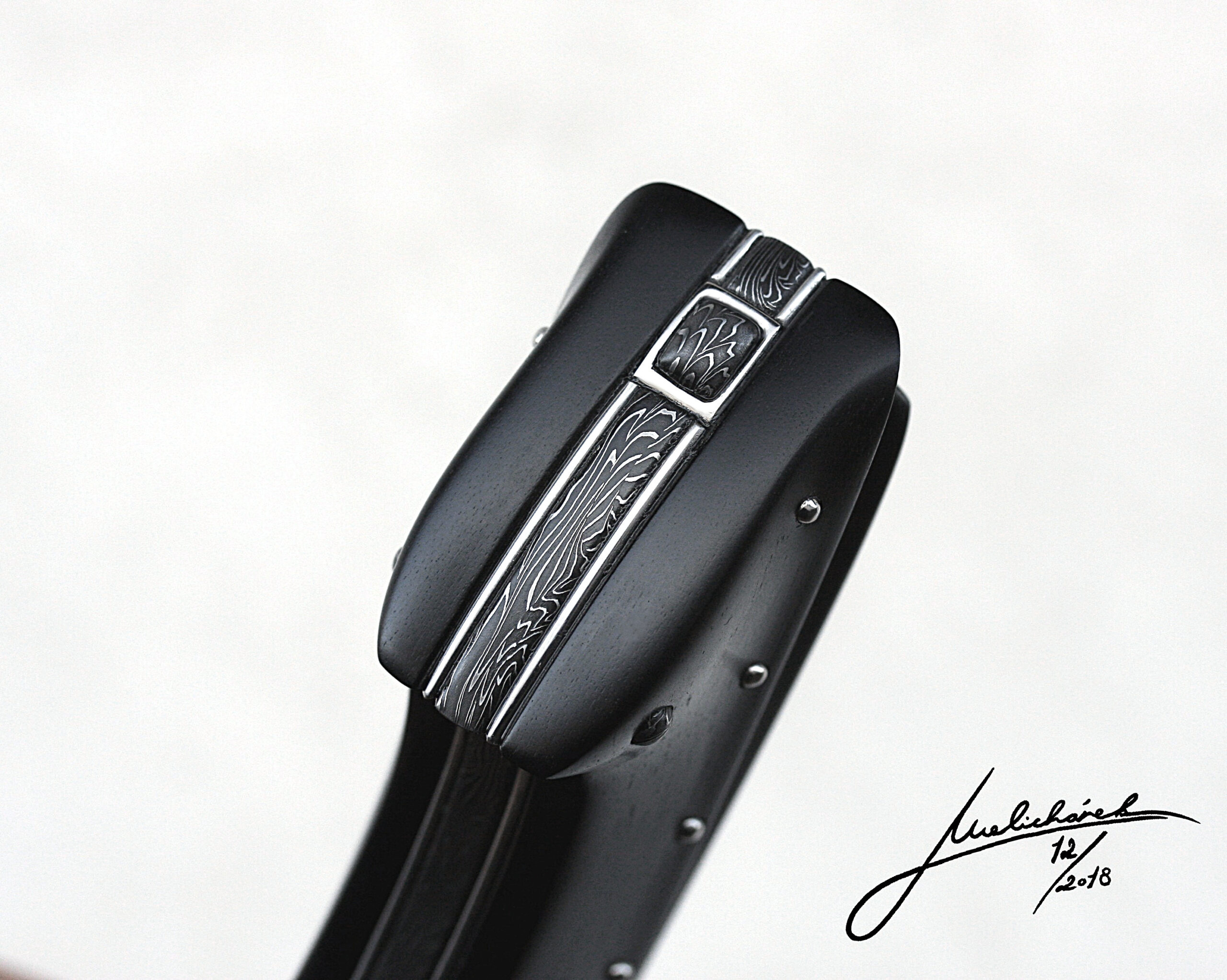
A carbon damascus knife should always be protected with oil. As mentioned, there’s no need for the oil to run—it’s enough to apply a thin, almost invisible layer of suitable conservation oil. Over time this will dry on the blade and keep it protected, as long as the knife isn’t being used or handled. When oiling, don’t forget the other metal parts, not just the blade. This mainly means the guard and bolster, but also the end cap or pommel, and especially the often-overlooked studs, rivets, or other decorative details on the sheath or handle—if your knife or sheath has them.
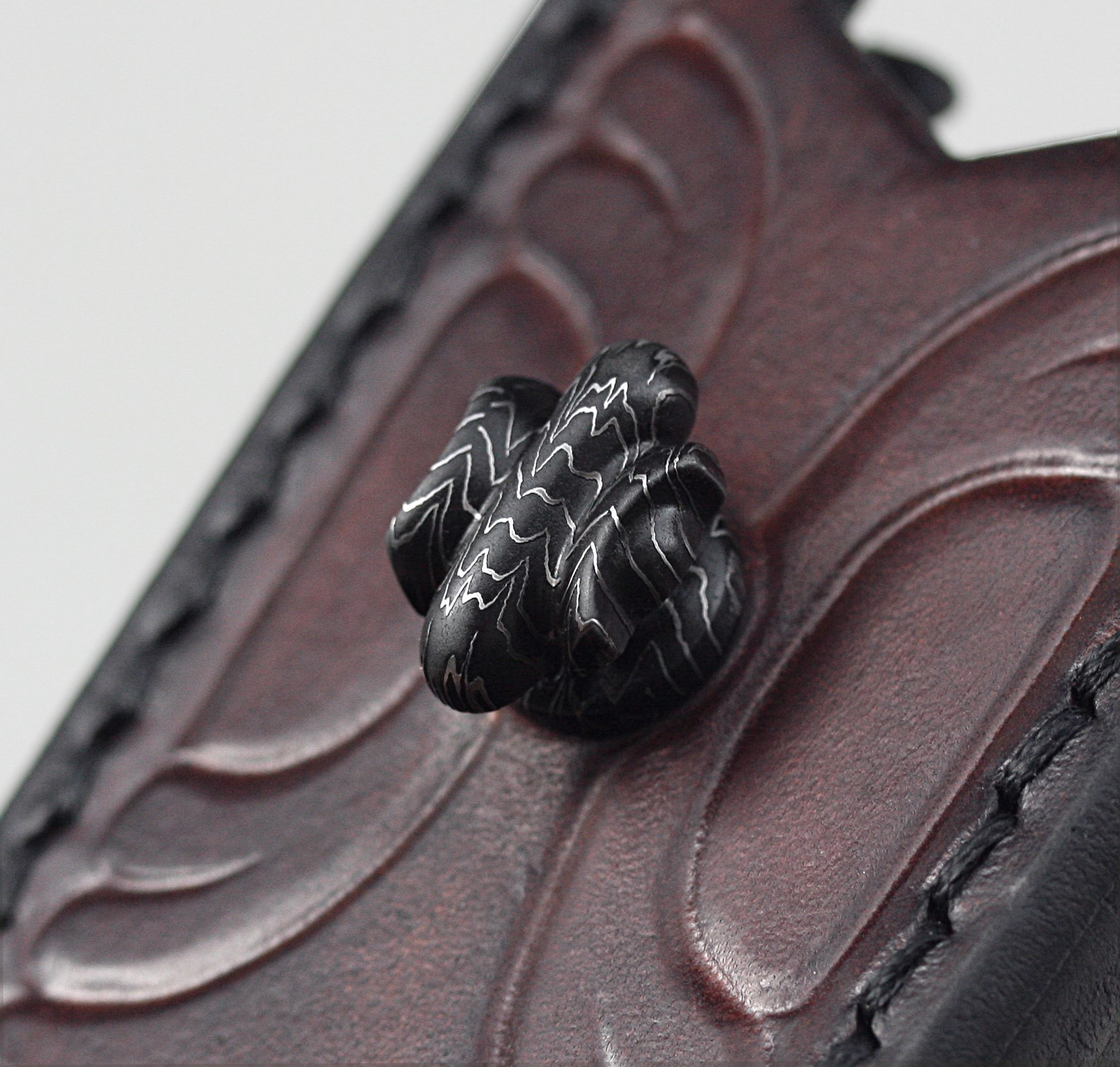
If a knife is placed on a fabric or leather surface, it will draw oil away from the underside. This can cause the knife to suffer from uneven protection and develop spots. For storage, I recommend placing a layer of plastic film or something similar underneath the knife—something that won’t absorb oil.
The sheath behaves the same way at first: it dries out the blade until it becomes properly conditioned inside. And if the knife is stored in a drawer, frequent opening can cause it to shift and rub against certain areas, leading to wear.
Maintenance of regularly used knives
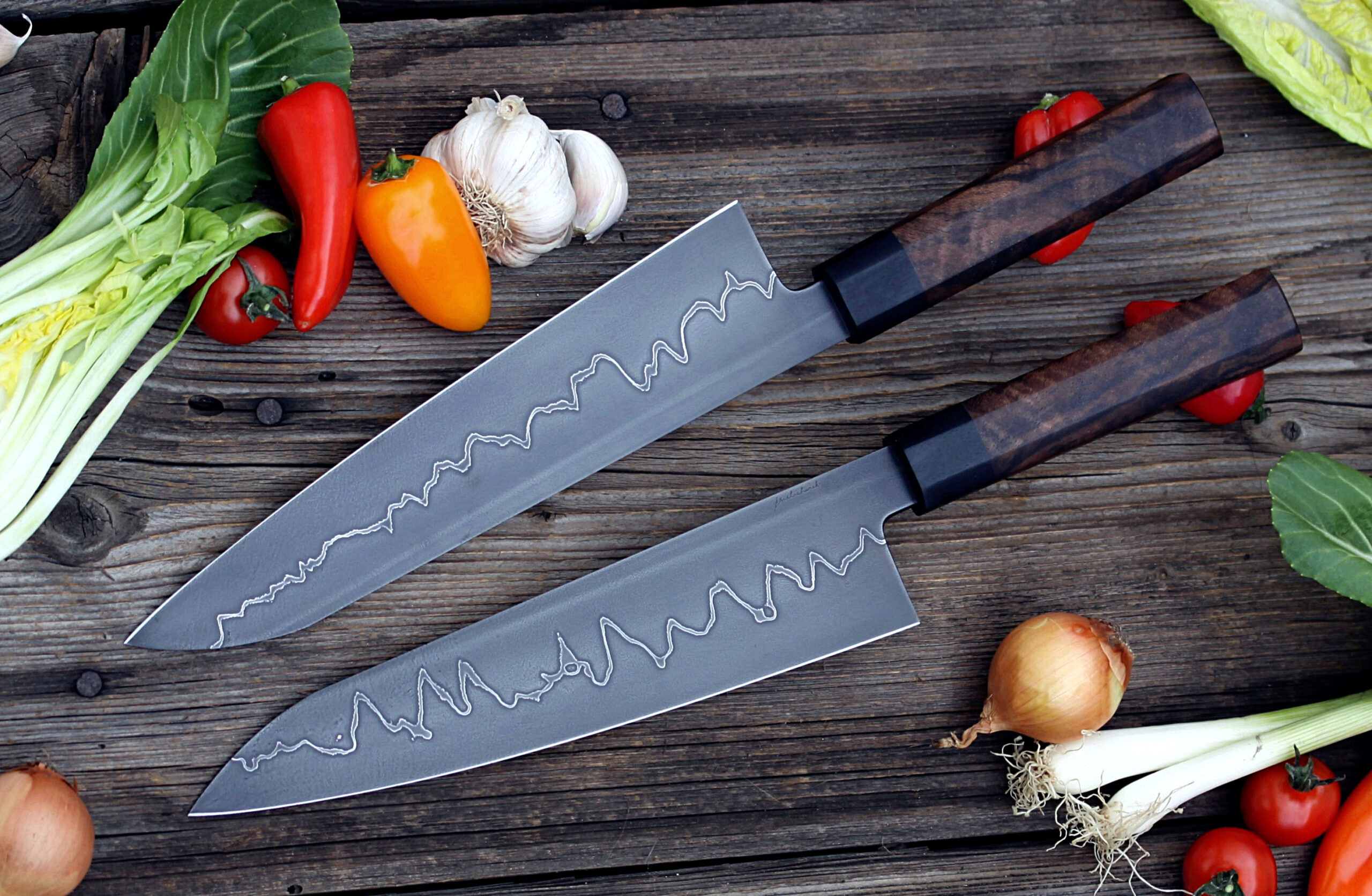
Keep the knife dry—ideally with a light coat of oil. Prevent corrosion, especially along the edge. If you use the knife frequently for routine tasks, an occasional light oiling as needed is enough. If the knife gets wet, your hands are very sweaty, or you use it for preparing vegetables or fruit, then washing, drying, and re-oiling afterward is essential.
If, on the other hand, you use the knife to slice smoked pork belly or bacon, then “no extra oiling is needed.” But be careful with things like butter and certain fats that contain fatty acids—they actually promote rust. For preserving the edge, camellia oil is an excellent choice, and olive or sunflower oil also works well for kitchen knives. They are food-safe and suitable for knives used in food preparation. Camellia oil offers longer-lasting protection and doesn’t degrade or go rancid. Outside the kitchen, you can use any commonly available synthetic oil sold in your country.
Sharpening
To keep the edge sharp for as long as possible, avoid contact with materials harder than the knife itself—for example, the common habit of cutting food on a plate. Always use a cutting board. For sharpening, use proper whetstones or specialized sharpening systems.
If you’re not sure how to sharpen a knife properly, visit a specialized forum or a Facebook group. Sharpening and honing knives is a bit of a world of its own and requires some knowledge. I recommend practicing first on cheaper knives! 🙂 Never use a metal honing rod unless you know exactly what you’re doing and what steel the knife is made from. By arrangement, you can also send the knife to me for sharpening.
Handle
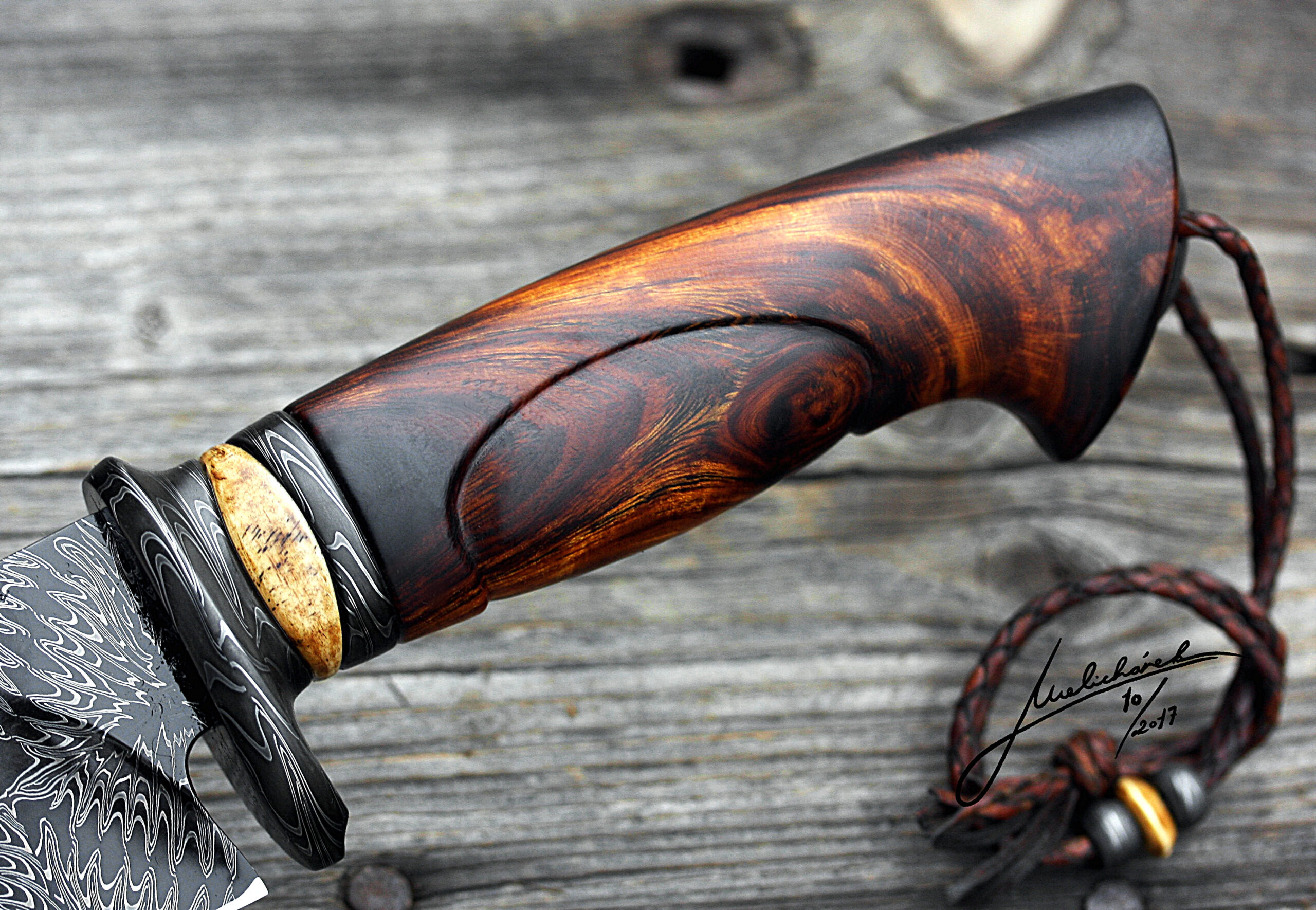
Care for the handle with its materials in mind. Avoid anything that can damage it—especially drops, prolonged exposure to water or weather, and swings in humidity. The handle must never become over-dried. Always keep it away from strong heat sources (stoves, radiators, direct sunlight, a car interior in summer). Otherwise the handle may crack by itself.
Some woods, such as ebony, are prone to cracking, while others are more resilient; however, if the wood is not stabilized, a crack from overdrying can occur in any type of wood. The same applies to bone, antler, and other natural materials. When planning your knife, I will of course recommend a suitable handle material and give you specific advice based on the choice.
Wooden handles should be oiled at least once every six months with linseed oil or thinned tung oil. You can buy these in specialty stores; I usually order them online. If the knife sees heavy use, apply the oil more frequently—there’s no harm in that. Also oil any bone or antler spacers/rings, for example those that may be part of the guard.
Here’s how I do it: I thin and prepare the oil as needed, warm it in a water bath until it’s lukewarm to slightly warm, then immerse the entire handle in the oil and let it cool.
The handle must not be water-soaked before this process. Let it dry at room temperature for at least a few days. Never dry it by a heater or anything similar, and avoid rapid drying—don’t use a hair dryer. The oil should be only warm—about “baby-bath” warm—never hot. Otherwise the handle could crack.
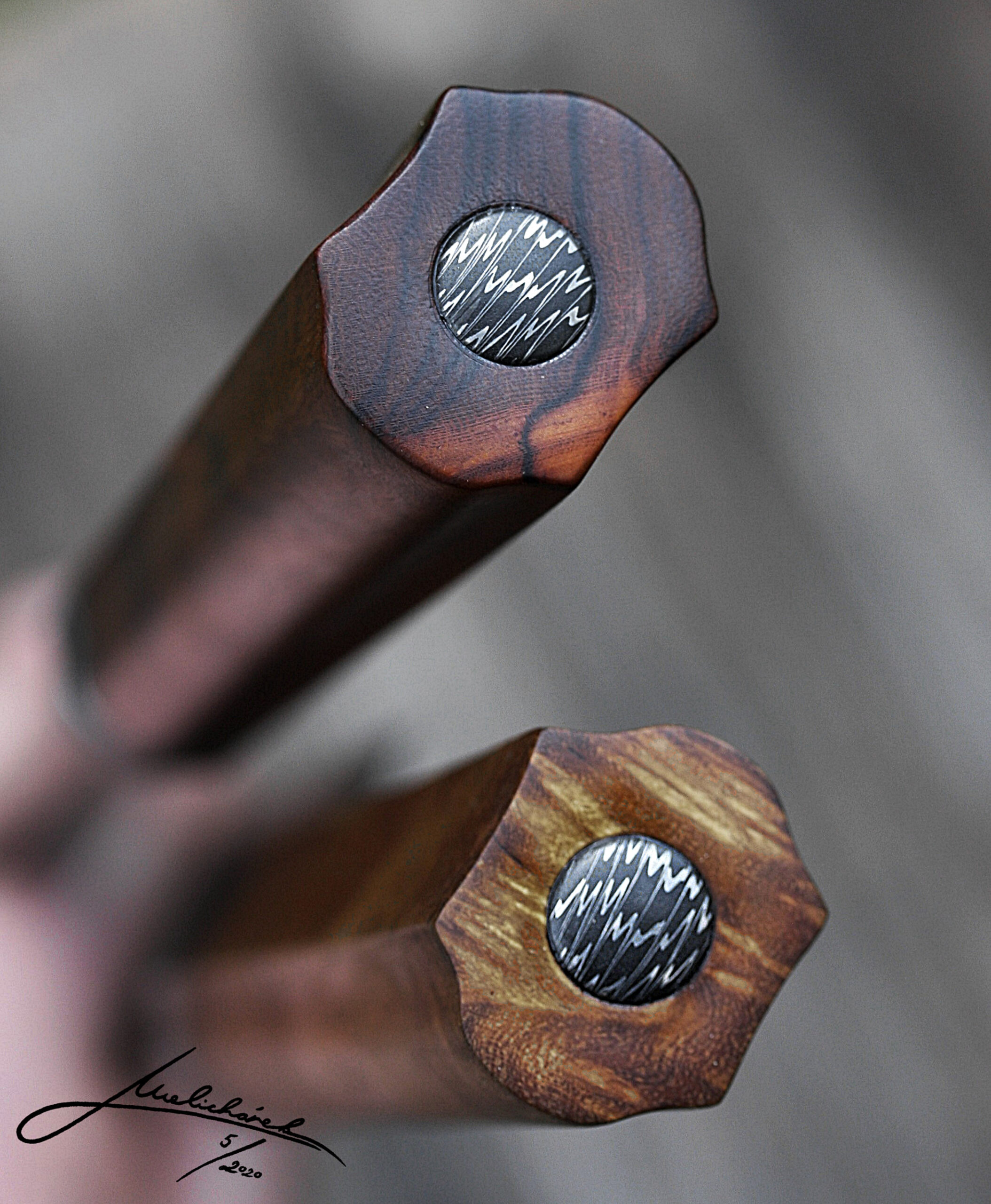
There’s no need to worry about immersing the knife with its metal parts. Just make sure to wipe the oil off thoroughly afterward, because oils for soaking handles leave a “rubbery” film once cured, and around the end cap or in the guard’s creases that would look unsightly. I use an old soft toothbrush for this, then throw it away so it doesn’t harden before the next use, along with paper tissues. To finish, you can also apply a special wax, such as carnauba or a similar product you’re used to. After that, polish the handle lightly with a soft cloth—but don’t rub patinated metal areas too hard if the knife is meant for a collection and you want to preserve the patina. Just treat it with care.
The only thing you really need to watch is the knife’s construction. The soaking method described above is meant only for knives with a hidden tang—ideally with a hidden nut. That’s the type I make most often, so this applies to the majority of my knives. It’s different with a full-tang knife—i.e., where the blade continues through the handle and scales are pinned/riveted on from the sides. For this type I don’t recommend soaking the entire handle. Oil can seep under the adhesive that holds the scales in place and may cause them to loosen. For a full-tang knife, brush the oil on as needed—one side and then the other—in regular intervals, until the wood stops absorbing it.
Sheath
The sheath protects the knife from environmental factors—and you from cuts. It should stay dry and resistant to moisture. For treatment you can use a wide range of oils and waxes. Products based on natural oils, for example those containing beeswax, are suitable. For polishing the sheath, something with carnauba wax works well.
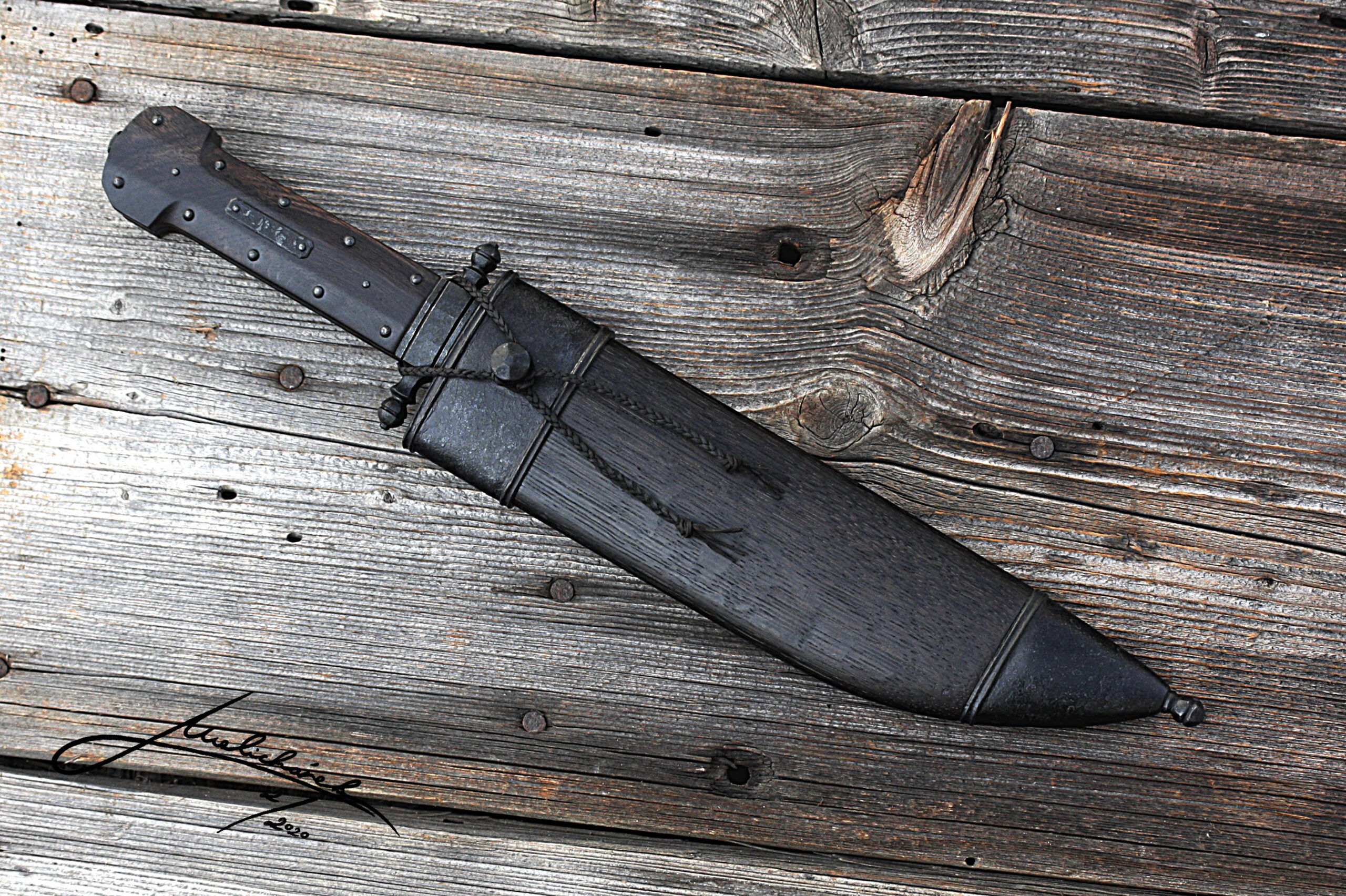
I make the vast majority of my sheaths from cow leather, with wet-molded/toolled motifs, and I dye them to match the overall design. In some special cases I also make wooden sheaths from the same material as the handle. If the sheath—or any part of it—is made of wood or bone, those parts should be oiled at regular intervals as you would the handle.
That’s about all that comes to mind right now regarding knife maintenance. If I’ve overlooked something, or if you didn’t find the answer you were looking for, feel free to contact me. In the “Contact” section you’ll find several ways to get in touch. English is perfectly fine—and besides my native Czech, I can also communicate in Spanish.
I hope a knife from me will serve you well, or bring you lasting joy in your collection. And if you’re only considering ordering a knife or are just curious about how I work, I’ll be glad if one of my pieces eventually finds its way into your collection
For more details about how the ordering process works, what the lead times are, and the approximate pricing of my knives, see the “Orders” section.